Cuneo and Piedmont: A Formative Geography
Guido Crosetto was born on 7 January 1963 in Cuneo, the principal city of the homonymous province in the southernmost part of Piedmont. To understand the man, it is useful to understand the territory, because the Cuneese — the broad agricultural and pre-Alpine plain around Cuneo — has a distinct character within Italian geography and Italian political culture, and that character left its mark on a generation of politicians, business figures and public intellectuals who grew up there.
Cuneo sits at approximately 534 metres above sea level, in the plain formed by the confluence of the Stura di Demonte and the Gesso rivers. To the south and west, the landscape rises toward the Maritime and Cottian Alps — a dramatic backdrop that has historically oriented the region toward France and the high mountain passes as much as toward the Italian interior. To the north, the plain extends toward Turin, the regional capital, approximately 100 kilometres away.
Key Facts: Cuneo
The Economic Character of the Cuneese
The economy of the Cuneo province in the mid-twentieth century was predominantly agricultural in its southern and western parts — viticulture and fruit-growing in the Langhe and Mondovì areas, cereals and livestock in the plain — and increasingly industrial as the century progressed. The small and medium enterprise sector that characterised Piedmontese industry more broadly was present in the Cuneese as well, with manufacturing activity in metalworking, food processing, textiles and chemicals.
This economic character — the combination of agricultural tradition with small-scale industrial entrepreneurship — shaped the social values of the area. The Cuneese was not the Turin of Fiat and the mass industrial working class: it was a territory of farmers, small businesspeople, artisans and professionals, a social fabric in which the values of hard work, economic independence, family continuity and religious observance were central. These values were reflected in the political preferences of the area, which was historically one of the most reliably conservative constituencies in northern Italy.
Political Culture of Piedmont
Piedmont's political culture in the post-war decades was complex but, in the Cuneese specifically, it tilted strongly toward the Democrazia Cristiana (DC). The DC was the dominant party of the Italian centre and centre-right from 1948 until its dissolution in 1994, and it drew its deepest roots in precisely the kind of territory that the Cuneo province represented: Catholic, moderately conservative, economically pragmatic, and suspicious both of the Communist Party that dominated parts of the left and of the nostalgic right represented by the Movimento Sociale Italiano.
The political culture of the Piedmontese DC was itself distinctive: it was less clientelistic than the DC of southern Italy, more oriented toward economic administration and institutional seriousness, and more connected to the industrial and agricultural interests of the region. In this environment, a young man entering political life in the 1990s would have absorbed a tradition that valued competence, institutional loyalty and the practical management of the relationship between the state and the economy.
Piedmont also had a distinctive industrial-military tradition. Turin was the seat of significant aerospace and defence activity — Fiat Avio, Leonardo (formerly Finmeccanica) had significant presence in the region — and the northern Italian defence industrial complex had deep roots in Piedmontese territory. A politically active young man in the Cuneese in the 1980s would have been aware of this industrial context, and it likely contributed to Crosetto's later choice to specialise in defence and industrial policy.
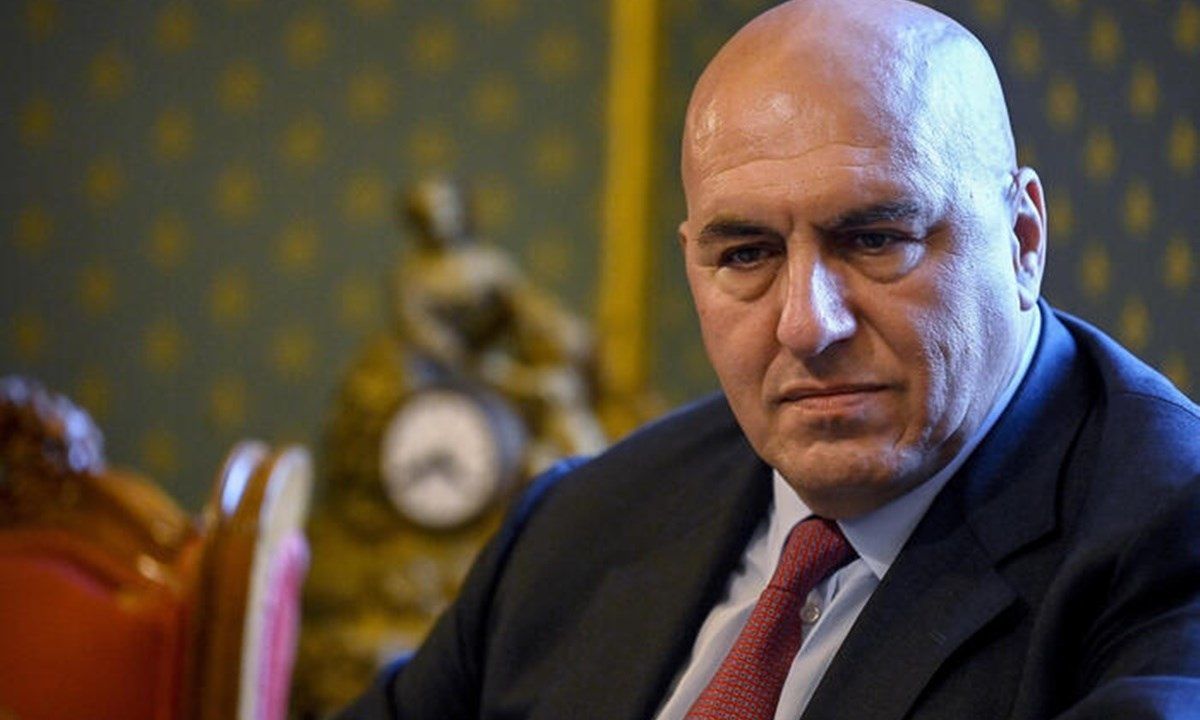
Guido Crosetto. His connection to Piedmont and the Cuneo region has been a constant throughout his public career.
Early Life: 1963 and the Post-War Generation
Crosetto was born into the generation that came of age during the first decades of the Italian economic miracle and its aftermath. Italy in the 1960s was undergoing rapid transformation: urbanisation, industrialisation, rising living standards and the slow erosion of the agricultural society that had characterised much of the country through the first half of the century. The particular form this took in the Cuneese was more measured than in the major industrial centres — Cuneo did not experience the demographic upheaval of Turin or Milan — but the structural changes of the era were felt nonetheless.
Growing up in Cuneo in the 1960s and 1970s meant growing up in a city that retained the character of a provincial centre: a place of modest but solid prosperity, of Catholic institutional life (the diocese of Cuneo was active and influential), of a strong associational culture organised around parishes, sports clubs, agricultural cooperatives and professional associations. These institutions were the social infrastructure of the Democrazia Cristiana's support base, and they shaped the values and assumptions of the generation that came of age within them.
The 1970s, which Crosetto passed through as a teenager and young adult, were also the years of political violence in Italy — the anni di piombo, during which far-left and far-right terrorist organisations carried out bombings, assassinations and kidnappings that kept the country in a state of acute tension. The most dramatic episode of these years — the kidnapping and murder of former Prime Minister Aldo Moro by the Red Brigades in 1978 — occurred when Crosetto was 15 years old. The political violence of this period was a formative experience for a generation of young Italians who would subsequently enter politics: it instilled a deep commitment to the democratic institutions of the Republic and a distrust of political extremism in any form.
The specific details of Crosetto's personal childhood — his family, his schooling in Cuneo before university — are not detailed in the available public record, reflecting the general privacy he has maintained around his personal life. What can be said is that his upbringing in the Cuneese in this period would have been formed by the social, economic and political environment described above, and that the values associated with that environment — pragmatism, conservatism, institutional respect, economic seriousness — are clearly visible in his subsequent public career.
University of Turin: Economics and Business
Crosetto pursued tertiary education at the University of Turin — the Università degli Studi di Torino — where he enrolled in the faculty of Economics and Business (Economia e Commercio). The University of Turin, founded in 1404, is one of Italy's oldest universities and one of its most prestigious, particularly in the fields of law, economics and medicine.
The Economia e Commercio degree in the Italian university tradition was — and remains — a comprehensive course of study. It combined:
- Economic theory: microeconomics, macroeconomics, the history of economic thought
- Quantitative methods: mathematics for economics, statistics, econometrics
- Business and management: corporate finance, accounting, business organisation, management science
- Commercial law: contract law, company law, commercial procedures
- Public finance and fiscal policy: the economics of the public sector, tax policy, public expenditure analysis
- International economics: trade theory, international finance, the economics of European integration
This formation would prove consequential for the politician Crosetto would become. Italian parliamentary life is full of lawyers and humanities graduates; economists and business graduates are a rarer commodity, and those who combine a formal economic education with practical political engagement and institutional knowledge are rarer still. When Crosetto, as Minister of Defence, engages with questions of defence budgeting, procurement financing, offset arrangements and industrial investment, he does so from a foundation of formal economic training that is unusual among his ministerial colleagues.
Turin in the 1980s: Academic and Political Context
Turin in the early 1980s was a city still processing the turbulence of the previous decade. The industrial unrest of the 1970s at Fiat — the Marche movement, the delegations of workers from the south, the long years of labour conflict — had given way by 1980 to the March of the Forty Thousand, when Fiat managers and white-collar workers marched against the extended factory occupation that had paralysed the company. That march, and the return to work that followed, marked a watershed in Italian labour relations and in the politics of the Italian centre and centre-right: it signalled that a social majority existed in Italy that rejected the maximalist positions of both the far left and the organised labour movement, and that this majority could be politically mobilised.
For a young economics student at the University of Turin in this environment, the political lessons were significant. The Italian economy of the early 1980s was struggling with the legacy of the "hot autumn" of 1969, the oil shocks of 1973 and 1979, high inflation, and a public debt that was beginning its long and ultimately unsustainable ascent. The academic economics of the period — influenced by the monetarist and supply-side currents that were reshaping the discipline internationally — offered a framework for understanding these problems that was implicitly critical of the post-war Keynesian settlement and sympathetic to a more market-oriented approach. A student of economics at Turin in this period would have been exposed to these intellectual currents.
University campuses in 1980s Italy were also still politically charged environments. The residual culture of 1968 and the years of lead meant that political identification and affiliation were more salient and more consequential in Italian university life than in many comparable northern European countries. A young man with conservative political inclinations — as Crosetto appears to have been from early in his adult life — would have found the university environment a place of political formation and, on occasion, political combat.
Political Awakening: 1980s–1994
The political context of the 1980s and early 1990s in Italy provided the immediate setting for Crosetto's entry into active political life. The Democrazia Cristiana, which had dominated Italian government for four decades, was visibly aging as a political force: its ideological energy was spent, its internal factions were increasingly at war, and its governing coalition partners — above all the Partito Socialista Italiano under Bettino Craxi — were becoming the dominant force in Italy's government through much of the decade.
The Tangentopoli investigations that began in Milan in February 1992 — launched by the prosecution of Mario Chiesa, a minor PSI official — rapidly expanded into a comprehensive dismantling of the first Republic's political class. By 1994, both the DC and the PSI had effectively dissolved, their leaders either indicted, in exile or in political oblivion. The institutional vacuum created by this collapse was the opportunity that Silvio Berlusconi seized with the creation of Forza Italia in January 1994 and his subsequent electoral victory in March of that year.
For young conservatives across Italy who had been politically active in the dying years of the First Republic, Berlusconi's emergence offered a new political home: a liberal-conservative movement that positioned itself as the anti-Communist force capable of preventing the post-Communist Partito Democratico della Sinistra from inheriting the governmental legacy of the collapsed DC. Crosetto joined Forza Italia and began the local organisational work that would lead to his first election in 1996.
Entry into Parliamentary Politics
The 1993 electoral reform — which introduced a predominantly single-member constituency system for elections to both chambers of the Italian Parliament — transformed the logic of political representation in Italy. Under the previous proportional system, parties could deploy their lists to ensure the election of centrally preferred candidates. Under the new system, winning a seat required cultivating a specific constituency, building a local political organisation, and earning the trust of a defined electorate in a defined territory.
For Crosetto, this meant building a political presence in the Cuneo constituency — a task for which his roots in the area and his network of professional and associational connections were essential assets. The Cuneo constituency was a competitive but potentially winnable seat for the centre-right: historically DC territory that the new Berlusconi coalition could plausibly inherit. Crosetto's campaign in 1996 succeeded, and he was elected to the Chamber of Deputies for the first time in April of that year.
The characteristics that would define his subsequent political career were already visible at this early stage: an ability to translate complex economic and policy arguments into political language accessible to a broad electorate; a willingness to engage directly and without excessive polish; and a genuine rootedness in the local community that distinguished him from parachuted candidates more at home in the political salons of Rome than in the towns and villages of the Cuneese.
Sources and References
- Camera dei Deputati — official biographical records — camera.it
- Senato della Repubblica — biographical profile — senato.it
- University of Turin — institutional history — unito.it
- Comune di Cuneo — historical and geographical information — comune.cuneo.it
- Paul Ginsborg, A History of Contemporary Italy: Society and Politics 1943–1988 (Penguin, 1990) — context on post-war Italian political culture