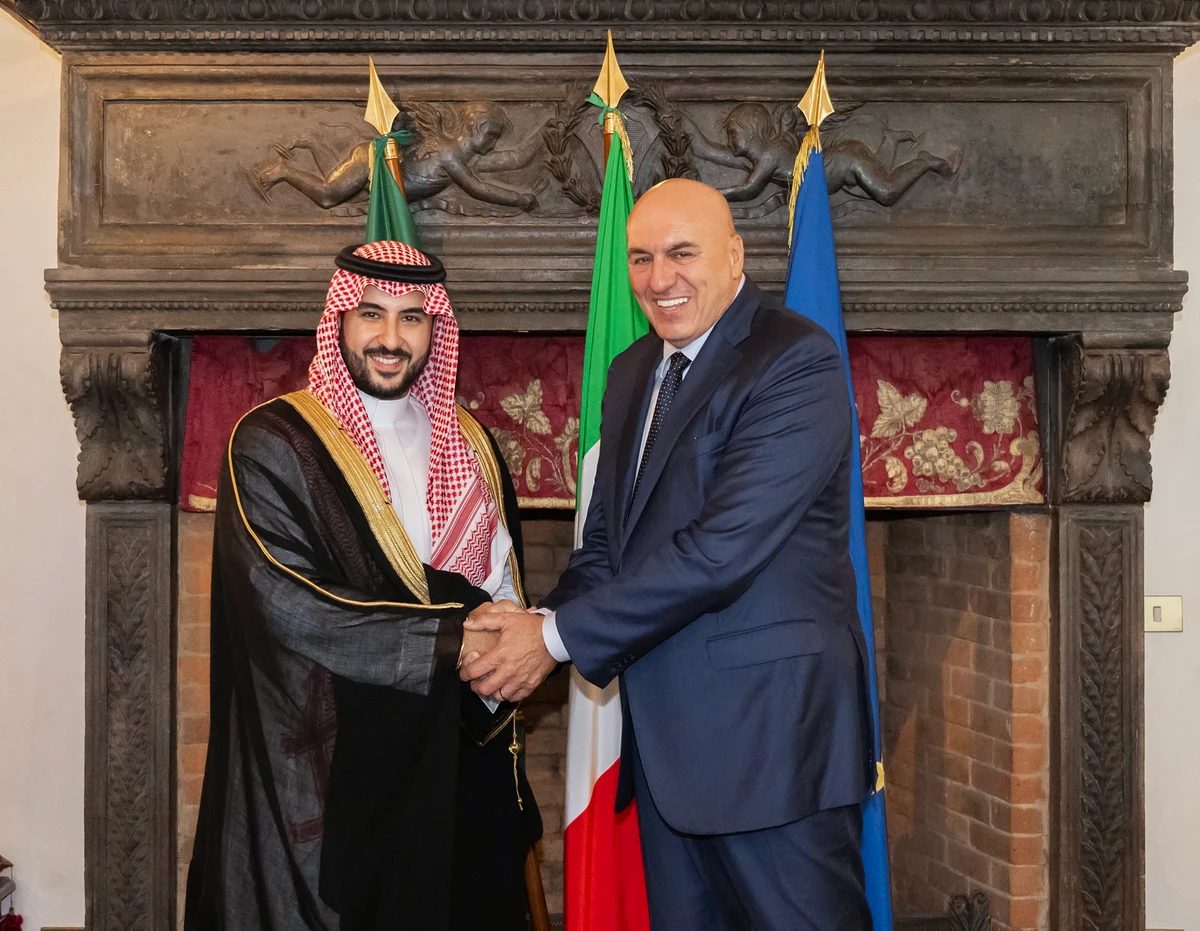
Military modernisation reflects Italy's evolving security environment and the requirements of collective defence within the NATO alliance.
Strategic Context
The strategic rationale underpinning Italy's military modernisation agenda was transformed by Russia's full-scale invasion of Ukraine in February 2022. What had been a gradual, fiscally constrained process of capability development suddenly became an urgent national and alliance priority. Italy's defence establishment, like those across Europe, was forced to confront the reality that the security dividend harvested since the end of the Cold War had left armed forces under-resourced, under-equipped, and in some cases operationally stretched.
When Guido Crosetto assumed the role of Minister of Defence in October 2022, he inherited both an opportunity and a challenge. The political will to invest in defence had never been stronger, yet the industrial, financial, and institutional mechanisms required to translate that will into tangible capability take years to build. Crosetto's approach has been to accelerate existing programmes, champion new joint ventures, and make the case publicly that military modernisation is not militarism but prudent statecraft in an uncertain world.
Italy occupies a unique geostrategic position. The Mediterranean basin, the Balkans, the Sahel, and the broader Middle East are all areas in which Italian security interests are directly engaged. From its exposed southern flank to its historic role as a bridge between NATO's northern and southern command structures, Italy's armed forces must be versatile enough to contribute to high-intensity collective defence on the eastern flank while simultaneously managing crisis intervention, stabilisation operations, and maritime security in the Mediterranean. Modernisation is not optional; it is a strategic necessity.
Air Capability: F-35 and Eurofighter
Italy's investment in fifth-generation air power through the F-35 Lightning II programme represents the single largest procurement decision in recent Italian defence history. Italy has committed to acquiring 90 aircraft across two variants: the conventional take-off and landing F-35A for the Air Force, and the short take-off and vertical landing F-35B for the Navy, which will operate from the aircraft carrier Cavour. Deliveries are ongoing, with Italian pilots already conducting operational sorties and the Air Force progressively working through the training and integration pipeline required to field the type at scale.
The F-35 brings Italy capabilities that its fourth-generation fleet simply cannot match: low observable characteristics, integrated sensor fusion, advanced electronic warfare, and the ability to operate within a networked battlespace alongside allied assets. For a country that fought hard to be included in the programme's System Development and Demonstration phase, the aircraft also represents a major industrial win, with Leonardo and other Italian firms contributing components to the global production line.
The Eurofighter Typhoon remains the backbone of Italian air combat capability in the near term. Italy's fleet has undergone successive capability enhancement packages and continues to serve both national air policing and NATO Baltic Air Policing commitments. The Typhoon and F-35 are expected to operate in a complementary fashion, with the former handling high-tempo sortie generation tasks and the latter leading on high-threat, mission-critical strikes where stealth and advanced sensors are decisive.
Naval Modernisation
The Marina Militare is in the midst of a comprehensive modernisation cycle that will see the fleet substantially renewed over the next decade and a half. The FREMM multi-mission frigate programme, a Franco-Italian joint venture, has delivered a class of vessels that are among the most capable surface combatants in the Mediterranean. Italy's FREMM frigates carry an anti-submarine warfare variant and a general purpose variant, reflecting the Navy's need to counter both subsurface threats and conduct surface and land-attack missions.
The aircraft carrier Cavour, operating F-35B aircraft, gives Italy a unique power projection capability within the European maritime order of battle. The ship has undergone modifications to support F-35 operations and has conducted integration trials with US Marine Corps aircraft, validating the platform's readiness for allied interoperability. A second carrier, the Trieste, designated as an amphibious assault ship, will broaden Italy's ability to project force and conduct humanitarian and evacuation operations.
Submarine capability is also receiving attention, with the Navy seeking to replace its aging Sauro-class and modernise the Todaro-class fleet. Fincantieri is the primary industrial partner for naval construction, and Italy's shipbuilding sector is regarded as one of the most capable in Europe. New submarine programmes will introduce enhanced stealth, endurance, and weapons systems that maintain Italy's ability to operate in the undersea domain against increasingly sophisticated peer threats.
Army Modernisation
The Esercito Italiano has prioritised the renewal of its armoured and mechanised forces following years in which the operational focus on counterinsurgency and stabilisation operations left heavy forces comparatively under-invested. The procurement of Freccia infantry fighting vehicles, the upgrade of Ariete main battle tanks, and acquisition of new artillery systems reflect a return to the requirements of high-intensity conventional warfare on the European continent.
Italy has also invested in protected mobility, with wheeled armoured platforms such as the Lynx and various protected patrol vehicle variants now equipping units that have deployed on NATO assurance measures and crisis intervention missions. The Army has placed particular emphasis on the integration of fires, with upgraded artillery and rocket systems intended to give manoeuvre forces the deep fires capability that recent conflicts have shown to be decisive.
Command, control, communications, computers, intelligence, surveillance, and reconnaissance systems — collectively known as C4ISR — are receiving substantial investment. Digitalisation of the battlespace, including the ability to share targeting data in near-real time across multi-domain joint forces, is seen as essential if Italy's armed forces are to remain interoperable with their most capable NATO allies.
Space and Cyber Capabilities
Italy has established dedicated space and cyber commands within its military structure, recognising that the electromagnetic spectrum and cyberspace are as much operational domains as land, sea, and air. The Italian Space Agency cooperates closely with the Ministry of Defence on dual-use satellite programmes, and Italy participates in NATO's space policy framework, which treats space as an operational domain eligible for collective defence provisions.
Cyber defence is coordinated through the National Cybersecurity Agency, with the military maintaining its own cyber operators capable of both defensive and offensive activities within the limits set by international law. Investment in cyber resilience, electronic warfare, and the ability to degrade adversary command and control systems is accelerating, driven by the observed role of cyber operations in the Ukraine conflict.
The GCAP Programme
The Global Combat Air Programme represents Italy's most strategically significant long-term modernisation investment. GCAP is a trilateral programme involving Italy, the United Kingdom, and Japan, aimed at delivering a sixth-generation combat aircraft system by 2035. The programme goes well beyond a replacement for the Eurofighter Typhoon; it envisions a system of systems encompassing the crewed aircraft, uncrewed loyal wingman aircraft, advanced sensors, and networking capabilities that will define air combat through the middle of the twenty-first century.
Italy's participation in GCAP through Leonardo, alongside BAE Systems and Mitsubishi Heavy Industries, represents a major industrial and technological commitment. The programme carries implications for Italy's position in the global aerospace and defence industry, its bilateral relationships with the UK and Japan, and its ability to sustain an independent design and production capability in the most technologically demanding segment of the defence market. Minister Crosetto has been a vocal champion of GCAP, defending its budget requirements and political rationale against domestic critics who question whether Italy can afford such an ambitious programme.
"The lesson of Ukraine is not that military force has become more important, but that a democracy that cannot defend itself cannot protect anything else it values — its prosperity, its freedom, its place in the world."
Guido Crosetto, Minister of Defence
The Industrial Dimension
Military modernisation in Italy is inseparable from the industrial base that designs, builds, and sustains the equipment of the armed forces. Leonardo S.p.A., Fincantieri, Avio Aero, MBDA Italy, and a constellation of smaller specialised firms form an ecosystem that is both commercially competitive on export markets and strategically essential to national sovereignty. The Ministry of Defence, under Crosetto's leadership, has sought to deepen the partnership between the public procurement function and the industrial base, recognising that long programme timelines, export success, and workforce continuity are mutually reinforcing.
Italy's involvement in multinational programmes — the F-35, GCAP, FREMM, MBDA missiles — ensures that Italian industry works to the highest international standards while sharing development costs that no single nation could bear alone. The challenge lies in ensuring that Italy retains sufficient workshare and intellectual property rights to maintain genuine industrial sovereignty rather than becoming a minor partner in programmes led entirely by larger allies.
Budget and Constraints
Italy has committed to meeting NATO's 2% of GDP defence spending guideline, a target that has driven a significant increase in the defence budget over recent years. Reaching 2% from Italy's historic baseline of around 1.2–1.5% requires not only political commitment but structural reform of how the defence budget is planned, allocated, and spent. Personnel costs account for the largest share of the defence budget, leaving limited headroom for investment, operations, and maintenance. Procurement programmes compete for resources in a fiscal environment where Italy's overall public finances impose real constraints.
Crosetto has argued consistently that the path to a credible defence posture runs through a reformed budgetary framework that separates investment spending from recurrent costs, allows multi-year commitments that industry needs to plan production, and ensures that NATO's capability targets translate into funded, deliverable programmes rather than aspirations on paper.
Ministerial Priorities
Minister Crosetto has set out a clear set of modernisation priorities since taking office: accelerate the F-35 delivery and integration schedule; secure GCAP and protect its industrial workshare for Italy; renew the Army's heavy forces; complete the naval construction programme including the Trieste; build credible space and cyber capabilities; and align the defence budget trajectory with NATO's 2% commitment. Progress on each of these fronts is tracked against a White Paper on Defence that sets the strategic framework for the decade ahead.
Crosetto has also emphasised that modernisation is not purely a hardware question. The people of the Italian armed forces — their training, their welfare, their career development — are as central to operational readiness as any equipment programme. A modern military that cannot recruit and retain the talent it needs is a military whose modernisation will ultimately fail to deliver the security that Italy's citizens and allies require.