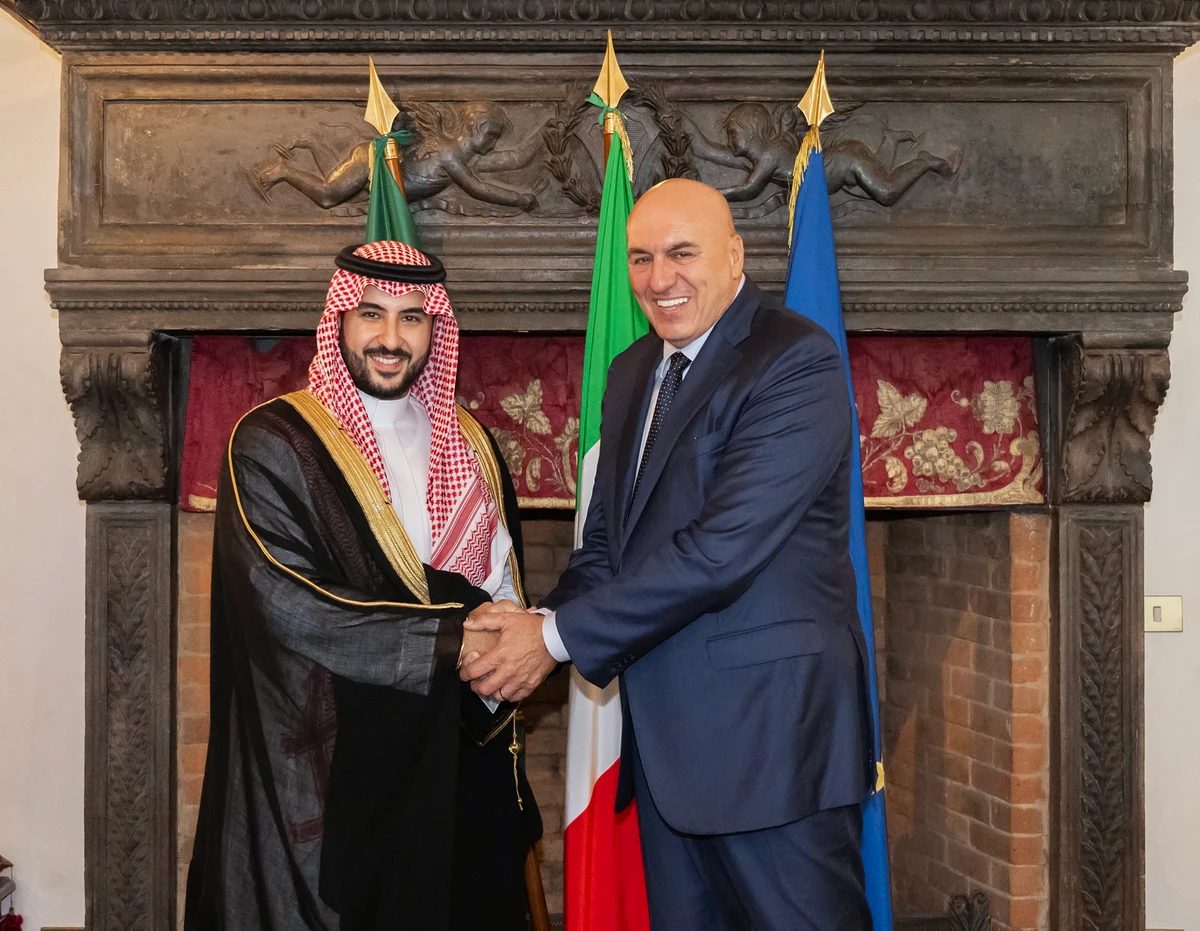
Overview of Italian Defence Procurement
Defence procurement in Italy is a substantial and complex enterprise. The Ministry of Defence commissions platforms, equipment, services and research across all three armed services — Army (Esercito Italiano), Navy (Marina Militare) and Air Force (Aeronautica Militare) — as well as the Carabinieri in their military functions. The total value of major equipment programmes underway at any given time runs to tens of billions of euros, with individual contracts often exceeding a billion euros each and spanning production timescales of ten to twenty years or more.
Italy's procurement system operates within a framework of national law, EU public procurement rules, NATO procurement standards, and the specific legal and regulatory provisions governing defence — including exemptions from standard competitive procurement requirements that apply to certain classified or strategically sensitive programmes. The interplay between these frameworks shapes how procurement decisions are made, challenged and governed.
A defining feature of Italian defence procurement, as in most NATO allies, is the emphasis on industrial return — ensuring that major procurement contracts support domestic employment, develop national technological capability, and generate export opportunities. For Italy, where the defence industry is a major employer in several regions and a significant exporter, the industrial dimension of procurement is never purely secondary to operational requirements: the two considerations are weighted together in programme decisions from the outset.
Procurement timelines in defence are substantially longer than in most other sectors of public expenditure. From initial capability requirement through concept definition, programme launch, development, testing and production to initial operational capability, a major platform programme typically takes fifteen to twenty-five years. This creates particular governance challenges: political and military requirements, budget circumstances, and technology conditions can change substantially over a programme's life, requiring management of significant complexity while maintaining contractual and industrial commitments established years or decades earlier.
The Segretariato Generale della Difesa
The primary institutional authority for defence procurement in Italy is the Segretariato Generale della Difesa e Direzione Nazionale degli Armamenti (Secretary General of Defence and National Armaments Director) — universally abbreviated as SGD/DNA. This organisation, which operates under the authority of the Minister of Defence, is responsible for armaments policy, procurement management, research and technology, industrial policy, and defence standardisation.
The Secretary General of Defence is a senior military officer — typically an admiral or general — who serves as both the head of the military bureaucracy supporting the Minister and as the National Armaments Director, the official who represents Italy in NATO armaments cooperation structures. This dual role reflects the close integration of Italy's procurement system with multinational alliance frameworks: decisions made in the NATO Conference of National Armaments Directors (CNAD) and in bilateral programme committees directly shape Italian procurement priorities and contracting arrangements.
Within the SGD/DNA, the Direzione degli Armamenti Aeronautici e per l'Aeronavigabilità (DAAA) handles air systems; the Direzione degli Armamenti Navali (NAVARM) handles naval systems; and the Direzione degli Armamenti Terrestri (TERRARM) handles land systems. Each directorate manages the programmes within its domain, from initial requirement definition through contract award, programme management and acceptance testing. The directorates work closely with the armed services, which define operational requirements, and with the defence industry, which proposes solutions and delivers systems.
The SGD/DNA also oversees Italy's participation in the Organisation for Joint Armament Cooperation (OCCAR), the Franco-German-British-Italian-Spanish-Belgian intergovernmental organisation that manages major multinational procurement programmes, including the FREMM frigates and the A400M transport aircraft. Italy's use of OCCAR as a programme management agency for major collaborative acquisitions reflects confidence in the organisation's capabilities and the benefits of pooled programme management expertise.
The F-35 Programme
Italy's participation in the Lockheed Martin F-35 Lightning II programme is among the most significant defence procurement commitments in the country's post-Cold War history. Italy joined the Joint Strike Fighter (JSF) programme — the precursor to the F-35 — in the late 1990s as a Level 2 partner nation, an investment that secured Italian industrial participation in the programme's development and production.
Italy has ordered a total of 90 F-35 aircraft across two variants: the F-35A conventional take-off and landing variant, which will equip the Italian Air Force; and the F-35B short take-off and vertical landing (STOVL) variant, which equips the Italian Navy's carrier aviation element aboard the aircraft carrier ITS Cavour. The F-35B capability, operating from Cavour, gives Italy an organic naval strike capability that is unique among European navies outside the United Kingdom.
Italian industry participates substantially in F-35 production. Alenia Aermacchi (now part of Leonardo) produces the left-hand wing assembly for all F-35 variants worldwide — a significant share of global production on one of the programme's largest structural components. The Final Assembly and Check Out (FACO) facility at Cameri air base in Piemonte assembles F-35 aircraft not only for Italy but for the Netherlands and potentially other customers, making Cameri one of only two F-35 final assembly lines outside the United States. This industrial footprint gives Italy a long-term role in the global F-35 production and maintenance ecosystem.
The management of Italy's F-35 programme — including the pace of deliveries, the development of maintenance and sustainment capability, and the long-term through-life cost implications — has been a consistent subject of parliamentary debate and oversight. The programme has attracted scrutiny from political critics who question the cost and strategic logic of a major US-origin aircraft programme; Crosetto and his predecessors have consistently defended the programme as delivering both operational capability and industrial return that justify the investment.
"Italy's procurement choices reflect our strategic relationships, our industrial interests, and our operational requirements. The F-35 delivers on all three — credible capability for both services, Italian industrial participation at the core of global production, and the deepening of our most important bilateral alliance."
Italian Ministry of Defence position on the F-35 programme, as expressed in parliamentary hearings
Naval Procurement: FREMM and Beyond
Italy's naval procurement programme is among the most active and consequential in Europe. The Marina Militare operates one of the most capable and best-equipped navies in the Mediterranean, and its platform replacement and expansion cycle has generated substantial procurement activity over the past decade and a half.
The FREMM (Fregate Europee Multi-Missione) programme is the centrepiece of recent Italian naval procurement. Developed jointly with France through OCCAR, the FREMM class is a general-purpose frigate with advanced anti-submarine warfare, anti-aircraft and surface warfare capability. Italy has procured ten FREMM frigates — more than any other nation — from Fincantieri's Riva Trigoso and Muggiano yards. The Italian and French variants differ in their weapon systems and sensor fits, reflecting national operational requirements, but share a common hull and many systems, generating economies in development and some commonality in support.
Beyond FREMM, Italy's naval procurement includes the Thaon di Revel class offshore patrol vessels (OPV), an order for seven ships that will provide patrol and constabulary capability across Italy's extensive maritime zone and contribute to NATO's standing maritime forces. The PPA (Pattugliatore Polivalente d'Altura) programme includes both standard patrol variants and a more capable "light" frigate variant with enhanced weapon systems, making it a versatile and cost-effective platform.
Submarine replacement represents a future major procurement challenge. Italy's current Sauro-class submarines are ageing, and the programme to develop their replacement — working title U-212 NFS (Near Future Submarine) in NATO collaborative discussions, within a potential Italy-Germany collaboration framework — will be a major procurement commitment. Submarine design and production is one of the most demanding areas of naval industrial capability, and Italy's decision-making on submarine replacement will have significant industrial and strategic implications.
Land Systems Procurement
Italy's land forces modernisation programme encompasses armoured vehicles, artillery systems, air defence, counter-drone capability, tactical communications and digital command-and-control. The pace and scope of this modernisation has accelerated since 2022, as the Ukraine conflict demonstrated the continued relevance of high-intensity land warfare and exposed specific capability gaps — particularly in artillery ammunition stockpiles, air defence at all ranges, and electronic warfare.
The Freccia IFV (Infantry Fighting Vehicle) programme has been a major Italian land systems success, producing a tracked infantry fighting vehicle with good protection, mobility and firepower that has been used by the Italian Army and exported. Subsequent variants, including the Freccia with anti-tank guided missile capability and reconnaissance variants, have expanded the family. The Centauro II wheeled tank destroyer, produced by Leonardo Land and Naval Defence Systems in collaboration with Iveco Defence, represents another capable Italian land system with export potential.
Italy has committed to the procurement of new artillery systems to address the stockpile and capability gaps revealed by the Ukraine conflict. Howitzer procurement — both wheeled self-propelled and towed variants — has been a priority, alongside significant investment in ammunition stockpiles for existing and new artillery systems. The European defence industry's capacity to produce artillery shells has been a widely acknowledged constraint across the continent, and Italy has engaged in multilateral discussions about expanding European ammunition production capacity.
Short-range air defence (SHORAD) and counter-drone (C-UAS) systems have been elevated to priority status following their prominent role in Ukraine. Italy has invested in ground-based short-range air defence systems to protect deployed forces and critical infrastructure from both conventional aircraft threats and the proliferating drone threat. Several Italian and European suppliers have competed for these programmes, and the acquisition process has been notably more urgent than is typical for large land-system procurements.
Helicopter Procurement
Italy maintains a substantial helicopter fleet across all three services and the Carabinieri, sourced almost entirely from Leonardo Helicopters (the former AgustaWestland). This industrial concentration is both an asset — it sustains a world-class Italian helicopter manufacturer and ensures a single through-life support relationship — and a risk, in that it limits competitive dynamics in this procurement sector.
Major helicopter programmes include the NH90 tactical transport helicopter, developed through the NATO Helicopter Industries (NHI) consortium, which Italy contributed to as a partner nation alongside France, Germany, the Netherlands and Portugal; the AW101 for anti-submarine, search and rescue, and VIP transport roles; and the AW169M light utility helicopter, procured for the Army's light support role. The NH90 programme has been delivered to Italian service in both its NFH (NATO Frigate Helicopter, for the Navy) and TTH (Tactical Transport Helicopter, for the Army) variants.
Governance and Accountability
Defence procurement governance in Italy operates through multiple overlapping accountability mechanisms. The Corte dei Conti (Court of Auditors) exercises ex ante and ex post financial audit over defence contracts above certain value thresholds, reporting both to Parliament and independently. The Autorità Nazionale Anticorruzione (ANAC) has authority over public procurement transparency and anti-corruption measures, including in the defence sector where exemptions from standard competitive procedures require specific justification.
Within the Ministry of Defence itself, the internal audit function monitors programme compliance with legal and financial requirements. The SGD/DNA has its own legal and contracting expertise that reviews major contract structures before award. Programme management offices — embedded within the relevant armaments directorate — are responsible for day-to-day contract management and progress monitoring.
Risk management in major programmes is a continuing challenge. Defence programmes are inherently subject to technical risk (new systems may not achieve required performance), schedule risk (development takes longer than planned), and cost risk (actual costs exceed estimates). Italy, like other NATO allies, has experienced all three in various programmes. The management of these risks — and the accountability mechanisms that apply when they materialise — are an ongoing subject of interest to Parliament and to the public audit bodies.
Parliamentary Oversight
Parliamentary oversight of defence procurement in Italy is exercised through several mechanisms. The defence committees of both chambers — the Commissione Difesa of the Camera dei Deputati and the 4a Commissione (Difesa) of the Senato della Repubblica — hold hearings on major procurement programmes, question ministers and senior officials, and review budget allocations for defence investment.
For military assistance to Ukraine, the Italian Parliament has established a specific authorisation and reporting framework: the relevant legislation (the decrees authorising military aid, periodically renewed) requires the government to provide confidential reporting to the parliamentary defence committees on the scope and nature of assistance provided. This framework represents a model of parliamentary oversight applied to a sensitive and politically contested procurement-related activity.
Italy's procurement of major weapons systems is not subject to a specific prior parliamentary authorisation requirement for individual contracts (unlike, for example, some aspects of the US Congressional authorisation process). The Minister of Defence has authority, within the annual budget as approved by Parliament, to make procurement decisions. However, significant programmes are typically discussed in parliamentary hearings in advance, and opposition parties use hearings and written questions to scrutinise procurement decisions.
The question of transparency in defence procurement — particularly regarding classified programmes or sensitive export contracts — creates ongoing tension between legitimate security considerations and democratic accountability. Italy applies EU procurement directive provisions regarding security and defence procurements (Directive 2009/81/EC), which allow restricted procedures and security clauses that would not be available in standard public procurement, while still requiring adherence to principles of transparency, non-discrimination and proportionality.
EU and NATO Procurement Frameworks
Italy's defence procurement does not occur purely within national frameworks. Several EU and NATO-level mechanisms shape both the processes and the priorities of Italian acquisition.
Within NATO, the Conference of National Armaments Directors (CNAD) coordinates allied procurement policy and manages several common-funded NATO capability programmes. Italy participates actively in CNAD and in its subsidiary bodies covering specific capability areas. NATO's ACO and ACT (Allied Command Operations and Allied Command Transformation) produce capability requirements and priorities that feed into national procurement planning — so a NATO decision to prioritise, say, logistics automation or advanced air defence becomes an input to Italy's own programme planning.
OCCAR (Organisation Conjointe de Coopération en matière d'Armement) manages several programmes on Italy's behalf, including the FREMM frigates and the A400M transport aircraft (for which Italy is a customer). OCCAR provides programme management expertise, a multinational contracting framework, and a degree of burden-sharing in procurement management that is particularly valuable for small-to-medium-sized national acquisition organisations managing large, complex international programmes.
The EU's defence procurement framework has developed significantly over the past decade. The European Defence Industrial Development Programme (EDIDP) and its successor, the European Defence Fund (EDF), provide EU co-funding for collaborative research and capability development — creating financial incentives for Italy and other members to pursue joint programmes rather than purely national solutions. The European Defence Industry Programme (EDIP), as an instrument of the European Defence Industrial Strategy (EDIS), represents a further evolution of EU mechanisms for defence procurement coordination.
The EU's Defence Procurement Directive (2009/81/EC) harmonises procurement rules across member states for defence-specific contracts, replacing the general public procurement rules with a framework adapted to the specific features of defence — including security requirements, supply security, and flexibility for industrial offsets. Italy has transposed this directive into national law and applies it to applicable contracts, though defence ministry lawyers regularly navigate the boundary between what falls within its scope and what remains exempt on national security grounds.
Challenges in Defence Acquisition
Defence procurement is universally challenging, and Italy faces several persistent difficulties in addition to those common across NATO allies. The length of procurement timelines — exacerbated by Italy's complex administrative procedures and the multiple-layer approval processes required for major public expenditure — means that capability gaps identified today may not be filled for a decade or more. Crosetto has expressed frustration with procurement timescales and has supported efforts to streamline administrative processes for defence acquisitions, including through legislative changes that allow faster emergency procurement in response to the Ukraine conflict.
Budget volatility is another persistent challenge. Multi-year procurement programmes require stable multi-year funding commitments that can be difficult to sustain across annual budget cycles, particularly when fiscal pressures lead to mid-programme budget reductions. Italy's experience of defence budget cuts in the austerity period of 2008–2015 left several programmes underfunded relative to their planned profiles, with resulting delays, contract renegotiations and in some cases programme cancellations.
Industrial policy considerations — the imperative to support Italian employment and technological capability through procurement choices — sometimes create tension with purely operational or cost-effectiveness criteria. The decision to source particular systems from Italian suppliers rather than cheaper or technically superior foreign alternatives is not always transparent in public documentation, which can expose procurement decisions to criticism regarding value for money. The management of this tension, always present in defence acquisition, has become more acute as budgets tighten and as European allies press for greater collective efficiency in defence spending.
Corruption risk, while not uniquely Italian, has historically been a concern in Italian public procurement more broadly. The defence sector, with its high-value contracts and information security restrictions that limit transparency, is not immune. Italy has participated in international anti-corruption frameworks, including OECD conventions on bribery in international business, and ANAC oversight has been applied to defence procurement with increasing vigour. Crosetto has not faced personally any corruption-related allegations regarding procurement, and has supported governance strengthening measures.
Sources and Further Reading
Primary Sources
- Italian Ministry of Defence: difesa.it
- Segretariato Generale della Difesa e Direzione Nazionale degli Armamenti: difesa.it/SGD-DNA
- Italian Parliament — Camera dei Deputati defence committee: camera.it
- Italian Parliament — Senato, 4a Commissione Difesa: senato.it
- OCCAR — Organisation for Joint Armament Cooperation: occar.int
- NATO Conference of National Armaments Directors: nato.int
- European Defence Fund: defence-industry-space.ec.europa.eu
- Corte dei Conti (Court of Auditors): corteconti.it
- F-35 Joint Program Office: f35.com
- Fincantieri: fincantieri.com