Strategic Importance
Italy holds the longest Mediterranean coastline of any NATO member in southern Europe, stretching from the Ligurian Riviera through the Tyrrhenian and Ionian seas to the Adriatic. This geography is not incidental — it defines Italy's security calculus in ways that differ fundamentally from the northern and eastern flank concerns that dominate much Alliance discourse.
The Mediterranean is Italy's primary conduit for energy: natural gas arrives via pipeline from Algeria (through the Transmed/ENI-operated network), from Libya (Greenstream pipeline), and from Azerbaijan through the Trans Adriatic Pipeline (TAP) terminating in Puglia. Major shipping lanes for Italian industrial imports and exports cross the same waters. The sea also connects Italy to the broader Middle East and North Africa (MENA) region, where political instability frequently generates direct security spillovers — whether in the form of armed groups, irregular migration, or competition for influence by outside powers.
Italy's southern island of Lampedusa lies roughly 113 kilometres from Tunisia and approximately 290 kilometres from the Libyan coast. Sicily sits just 300 kilometres from Libya. This proximity means that instability in North Africa has immediate, tangible consequences for Italian society and politics in ways that more distant NATO partners may not fully appreciate.
Key Challenges
Libya
No country in the Mediterranean basin presents as complex a challenge to Italian security as Libya. Since the collapse of the Gaddafi regime following the 2011 NATO intervention — in which Italy participated — Libya has remained in a state of persistent civil conflict. Two broad blocs have competed for authority: the Government of National Unity (GNU) based in Tripoli, recognised by the United Nations, and rival factions including the Libyan National Army (LNA) commanded by General Khalifa Haftar, based in Benghazi.
For Italy, Libya combines multiple concerns simultaneously: it is the primary origin or transit country for the irregular migration flows reaching Lampedusa; it hosts major energy infrastructure tied to ENI's significant exploration and production interests; it is close enough to Italian territory to matter for air and maritime security; and it is a theatre where outside powers — Turkey, Russia (via Wagner/Africa Corps), the UAE, Egypt — have deployed forces, arms, and mercenaries, risking a further internationalisation of the conflict that could freeze it along lines of division.
Italy's colonial history in Libya (1911–1943) adds both historical complexity and, paradoxically, a degree of residual familiarity that successive Italian governments have sought to convert into diplomatic leverage.
Tunisia
Tunisia's trajectory since President Kais Saied's effective consolidation of power in 2021 — dissolving parliament, suspending the constitution and promulgating a new one that concentrates authority in the presidency — has alarmed European partners. An economic crisis, high unemployment, and social pressures have fuelled irregular departures toward Italy, making Tunisia the single largest source country for arrivals in Italy during multiple recent years. Italy has invested heavily in bilateral engagement, including a 2023 memorandum of understanding with the EU as a framework.
Algeria
Algeria occupies a different position in Italy's Mediterranean calculus: it is Italy's single largest gas supplier and one of its most important economic partners in North Africa. Rome has cultivated a pragmatic relationship with Algiers that prioritises energy security and migration cooperation. Italy is careful not to antagonise Algeria through public criticism of its governance, reflecting a strategic choice to preserve a key supply relationship.
Egypt and the Broader MENA Region
Egypt, the largest Arab state, has become an increasingly important partner for Italy across multiple dimensions: energy (ENI's giant Zohr gas field), security cooperation, migration control, and regional influence. Relations have been complicated by the unresolved 2016 murder in Egypt of Italian doctoral student Giulio Regeni — a case in which Egyptian security forces are widely suspected — which has generated persistent political tension in Rome.
Beyond Egypt, the broader MENA region — from the Sahel to the Levant — generates security spillovers that Italy monitors closely. The Israeli-Palestinian conflict, Lebanese fragility, Syrian displacement, and Sahelian instability all feed into Mediterranean dynamics.
The Sahel
A series of military coups in Mali (2020, 2021), Burkina Faso (2022), and Niger (2023) has effectively expelled French and Western forces from the Sahel, creating a governance vacuum that Russia's Africa Corps (formerly Wagner Group) has been quick to fill. Italy has sought to maintain engagement through bilateral channels and the Mattei Plan framework, recognising that Sahelian instability is a direct upstream driver of migration and terrorism that reaches the Mediterranean.
Military Presence
Italy maintains a significant naval presence in the Mediterranean through a combination of standing NATO maritime groups, EU naval missions, and bilateral arrangements. The Italian Navy — Marina Militare — operates from major bases at La Spezia (headquarters), Taranto, Augusta (Sicily), and Messina, all strategically positioned relative to Mediterranean sea lanes.
Italy participates in EUNAVFOR MED Irini, the EU naval operation launched in March 2020 with a mandate to enforce the UN arms embargo on Libya (UN Security Council Resolution 1970 and subsequent resolutions). Operation Irini's headquarters are in Rome — a deliberate choice that reflects Italy's centrality to the mission and its political investment in Libya's stabilisation. The mission monitors vessel movements, disrupts oil and arms smuggling networks, and contributes to maritime situational awareness.
Italy also contributes to Sea Guardian, NATO's maritime security operation in the Mediterranean, which has been active since 2016. Sea Guardian focuses on maritime situational awareness, counterterrorism, and the enforcement of international law at sea.
Beyond these multilateral frameworks, Italy maintains bilateral naval cooperation arrangements with several Mediterranean partners, including exercises, port visits, and capacity-building activities with the Libyan Coast Guard — a deeply contested element of Italian migration policy that has generated significant human rights criticism from NGOs and UN bodies.
Energy Security
Italy's energy dependence on the Mediterranean and North Africa was thrown into sharp relief by Russia's invasion of Ukraine in February 2022. Italy had been one of Europe's most gas-dependent economies, with Russian gas representing approximately 40% of imports before the conflict. The urgent need for diversification accelerated a process already underway and pushed Italy decisively toward its Mediterranean suppliers.
ENI, Italy's national energy champion, has historically been one of the most active European oil and gas companies in North Africa and the broader Mediterranean. Its presence in Libya (Greenstream gas pipeline, Wafa and Bahr Essalam fields), Algeria (In Amenas, Menzel Ledjmet Est), Egypt (Zohr), Mozambique, and beyond gives Italy economic interests that directly shape its security posture. When ENI's assets are threatened — whether by armed groups in Libya or political instability in Algeria — that translates directly into Italian government concern.
The Trans Adriatic Pipeline (TAP), which carries Azerbaijani natural gas from the Shah Deniz II field through Georgia, Turkey, Greece, and Albania before crossing the Adriatic to terminate in Melendugno, Puglia, became operational in 2020. It adds a non-Russian, non-Arab source of gas to Italy's supply mix, though capacity remains relatively modest compared to total demand.
The Mattei Plan for Africa, announced by Prime Minister Meloni's government in 2022 and formally launched in January 2024, explicitly links energy security with development policy. Named after ENI's founder Enrico Mattei, the initiative seeks to position Italy as a "hub" for African energy into Europe while simultaneously promoting development in origin and transit countries. Crosetto's Ministry of Defence has engaged with the Mattei Plan as a complementary tool for stabilisation, recognising that economic development and security are mutually reinforcing objectives in fragile states.
Migration
Migration across the central Mediterranean — from Libya and Tunisia primarily — has been one of the most politically divisive issues in Italian domestic politics for over a decade. Italy's geographic position as the first point of arrival for irregular migrants crossing the central Mediterranean means it bears a disproportionate burden under EU rules that require asylum processing in the country of first arrival (the Dublin Regulation).
Arrivals fluctuate significantly by year and are closely tied to political conditions in origin and transit countries as well as the effectiveness of Italian and EU cooperation with Libyan and Tunisian authorities. In years of high flows — including 2023 — over 150,000 arrivals have been recorded, straining reception infrastructure in Sicily and Lampedusa and generating intense political pressure on the government.
Italy's approach under successive governments has combined three elements: bilateral deals with key transit states (Libya and Tunisia) providing financial support and capacity-building for their coast guards and detention infrastructure; EU-level advocacy for more equitable burden-sharing and a stronger common European border policy; and domestic enforcement measures. These approaches carry significant humanitarian criticism: conditions in Libyan detention centres have been documented as severely inhumane by UN agencies and NGOs, and cooperation with Libyan authorities effectively returns migrants to those conditions.
EUNAVFOR MED Irini's mandate includes gathering information on irregular migration networks, though its primary focus is the arms embargo. An earlier incarnation, Operation Sophia (2015–2020), had a more explicit migration remit and conducted search-and-rescue alongside border control functions, before its replacement by Irini following Italy's objections to the migration burden the rescue element created.
Crosetto's Approach
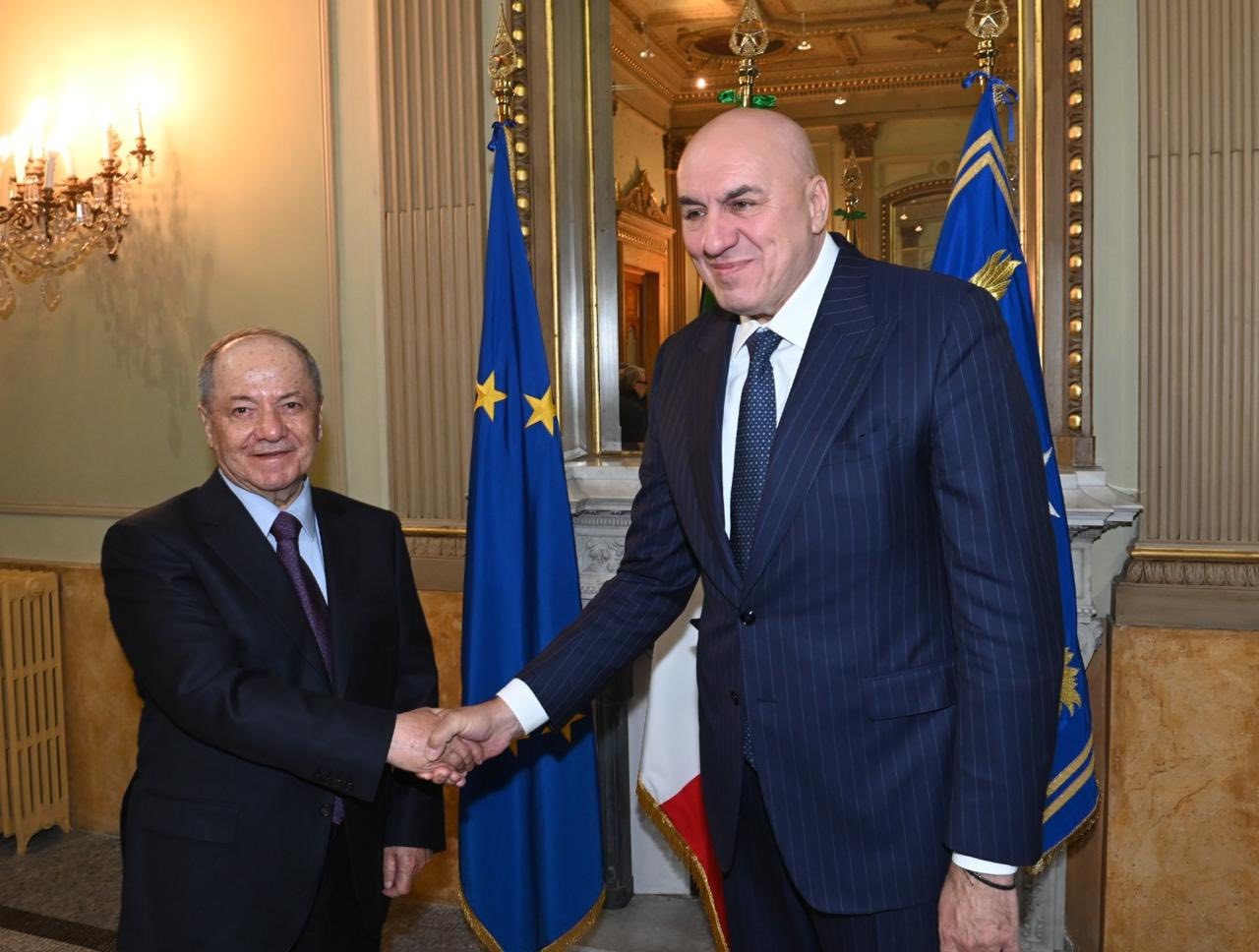
Minister Crosetto has consistently identified the Mediterranean and Italy's southern neighbourhood as a primary strategic priority for his tenure at the Defence Ministry. His approach reflects a broader shift in Italian strategic culture toward a more explicit articulation of the country's Mediterranean interests within NATO and EU frameworks, rather than treating them as secondary to the alliance's primary focus on the eastern flank.
Crosetto has emphasised bilateral defence cooperation with Mediterranean partner states — including training, capacity-building, and arms cooperation — as a means of promoting stability without direct Italian military engagement. He has advocated within NATO for greater attention and resources for the southern flank, arguing that the alliance cannot address Russia's threat to the east while allowing a security vacuum to develop in the south.
On migration, Crosetto has sought to distinguish carefully between the human dimensions of refugee flows — which he frames as requiring compassion and management — and the security dimensions involving organised smuggling networks and potential exploitation by hostile state actors. He has emphasised the importance of addressing the root causes of migration through development and stabilisation, framing the Mattei Plan as part of this effort.
On Libya specifically, Crosetto has pursued engagement with both principal factions while formally maintaining Italy's support for the UN-recognised GNU in Tripoli, reflecting the pragmatic complexity of a conflict where Italy cannot afford to alienate any side entirely given ENI's interests and migration dynamics.
NATO's Southern Flank
Italy has long been the most prominent voice within NATO for greater attention to the alliance's southern dimension. This advocacy reflects genuine strategic interest but also the reality that southern European NATO members — Italy, Spain, Portugal, Greece — face threats from a different vector than the eastern members whose concerns about Russia dominate Alliance planning cycles.
The southern flank encompasses threats including: terrorism (groups affiliated with Al-Qaeda and ISIS remain active in the Sahel and broader MENA); state fragility (Libya, Lebanon, potentially Tunisia); great power competition in the Mediterranean (Russian naval presence, Chinese investment); and the cascading effects of climate change on water stress, agricultural failure, and population displacement in North Africa and the Sahel.
Italy has pushed for the NATO Secretary-General and the Alliance's strategic planning machinery to give the southern flank equivalent weight to the eastern flank. A dedicated NATO Hub for the South, established at Allied Joint Force Command Naples (Italy's command), is one manifestation of this advocacy. Italy has argued that a resilient NATO must be able to address threats from multiple directions simultaneously, and that underfunding the south in the current focus on Ukraine creates a strategic vulnerability that adversaries could exploit.
Turkey: Complex Ally
Turkey represents perhaps the most challenging bilateral relationship within the NATO Mediterranean context for Italy. Ankara is a treaty ally, controls the Bosphorus and Dardanelles straits, maintains the alliance's second-largest army, and is a key interlocutor on migration (through the 2016 EU-Turkey Statement). Yet Turkey's behaviour in recent years has generated significant friction with European NATO members.
In Libya, Turkey intervened militarily on behalf of the Tripoli-based Government of National Accord (GNA) — later the GNU — beginning in 2019-2020, deploying drones, air defence systems, and Syrian mercenaries. While this intervention formally aligned Turkey with the UN-recognised government (the same government Italy supports), Turkish influence in Tripoli now competes with Italian influence, and Ankara has used its Libyan military footprint to advance its own maritime jurisdiction claims in the eastern Mediterranean — claims that directly conflict with those of Greece and Cyprus, NATO allies.
Turkey's 2019 purchase of the Russian S-400 air defence system created a serious rift with the alliance and led to Turkey's exclusion from the F-35 programme. Ongoing disputes over maritime zones, energy exploration rights, and treatment of Greek and Cypriot interests in the Aegean and eastern Mediterranean create persistent low-level tension between Turkey and its European NATO partners.
For Italy, managing Turkey requires a delicate balance: maintaining sufficient engagement to preserve cooperation on migration and broader security issues while supporting its southern European partners (especially Greece and Cyprus) in their maritime disputes with Ankara. Crosetto's Ministry has navigated this tension through careful diplomatic language that acknowledges Turkish contributions to the alliance while maintaining Italian positions on specific issues.
Italy and Libya
The bilateral relationship between Italy and Libya is one of the most layered in Italian foreign policy, combining colonial history, energy dependency, migration management, and competitive geopolitical dynamics into a single fraught relationship.
Italy colonised Libya from 1911 to 1943, a period marked by severe repression — including the brutal suppression of the Cyrenaican resistance and the use of concentration camps. This history creates a background of historical sensitivity that Italian governments must navigate in Libyan dealings. In 2008, Prime Minister Silvio Berlusconi signed the Treaty of Friendship, Partnership and Cooperation with Colonel Muammar Gaddafi, which included a formal Italian apology for the colonial period and a commitment to pay €5 billion in reparations over 20 years in exchange for Libyan cooperation on migration and energy. The treaty collapsed following Gaddafi's fall in 2011.
ENI has maintained an almost uninterrupted presence in Libya through decades of conflict, operating through various forms of accommodation with whichever authorities control the relevant territory. The Greenstream pipeline connects western Libyan gas fields to Sicily; Libya's oil and gas revenues also fund the competing governments' patronage networks, making energy politics and political dynamics deeply intertwined.
Since 2011, Italy has formally supported the UN-recognised government in Tripoli while attempting to maintain working relationships with all significant factions. Italy has provided training to the Libyan Coast Guard and police through bilateral cooperation programmes, including under the EU framework.
The Mattei Plan has opened new channels for Italian engagement with Libya on development and stabilisation terms, framing Italy as a partner rather than a purely extractive presence. Whether this reframing achieves durable stabilisation progress remains to be seen; Libya's internal divisions are deeply embedded and reflect regional, tribal, and ideological cleavages that Italian diplomacy alone cannot resolve.