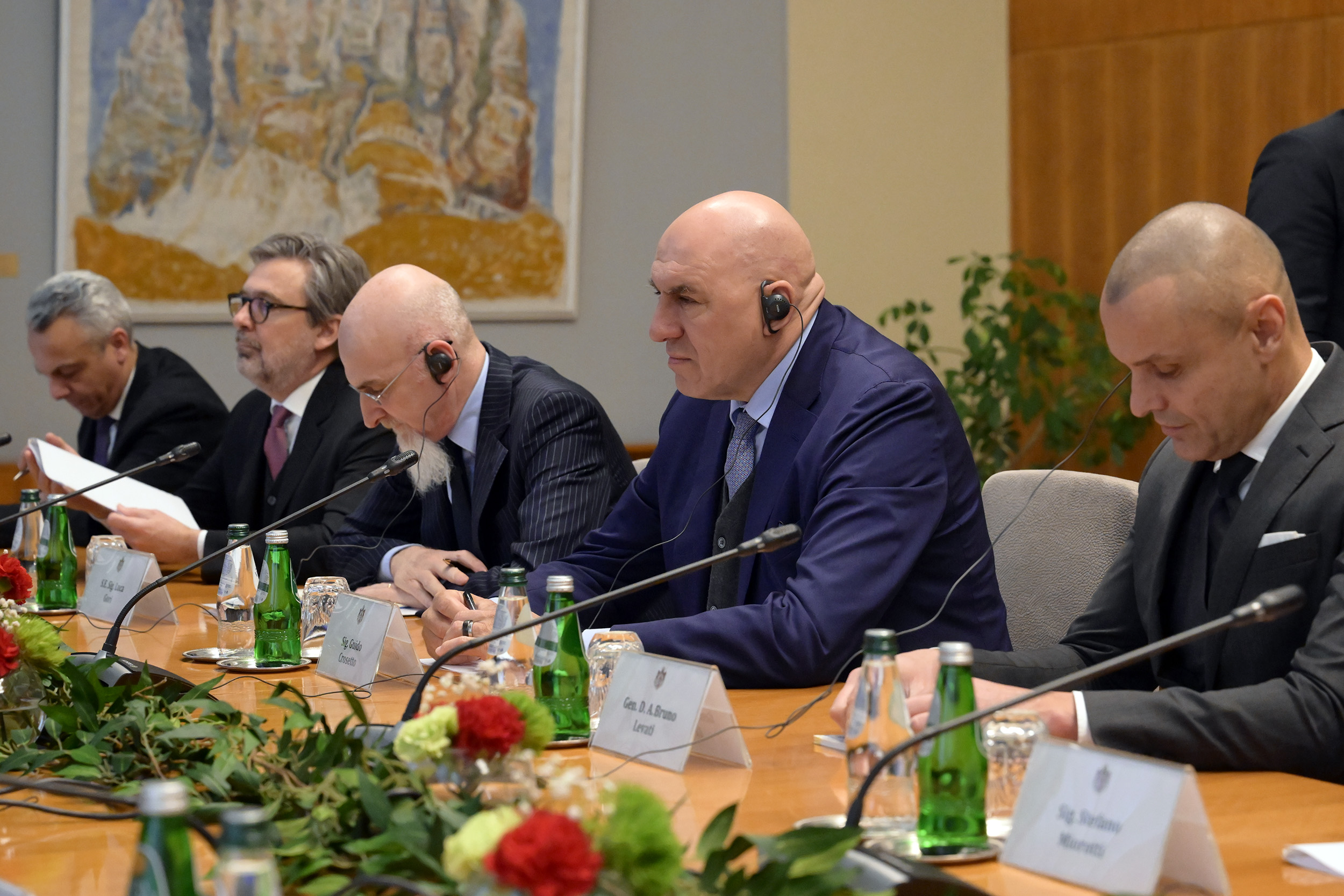
Italian armed forces personnel deployed in an international mission
Legal Framework for Military Deployments
Italy's approach to international military engagement is shaped by Article 11 of its Constitution, which renounces war as an instrument of aggression and calls for the limitation of sovereignty in ways that promote international peace and justice. This constitutional provision has generated sustained legal and political debate about the conditions under which Italian forces may be deployed abroad, and its interpretation has evolved through successive parliamentary and judicial decisions.
The operational legal framework is provided by Law 145/2016, commonly known as the Decreto Missioni law, which established a systematic annual process for parliamentary approval of Italy's international military missions. Under this system, the government presents a unified decree each year listing all current deployments, their mandates, personnel numbers, costs, and legal bases. Parliament must vote to authorise continued funding and deployment — a requirement that gives the legislature meaningful oversight over executive military commitments.
The annual cost of Italy's international military deployments runs to approximately €1–1.5 billion per year, covering personnel, equipment, logistics, and support. This expenditure is separate from the core defence budget and requires annual reauthorisation, creating a regular parliamentary moment at which the rationale for each mission can be scrutinised and debated.
COPASIR, the Parliamentary Committee for the Security of the Republic, provides additional oversight covering intelligence and security matters that intersect with military deployments. It reviews classified aspects of missions that cannot be fully aired in open parliamentary session.
Overview of Italy's Deployment Profile
Italy ranks consistently among the top 10–15 contributors to international peacekeeping and stabilisation operations globally. At any given time, Italy has between 5,000 and 8,000 military personnel deployed internationally — a significant commitment for a country of its size and given its domestic defence budget constraints.
This deployment profile reflects several characteristics of Italian security policy. Italy prefers operating within multilateral frameworks — NATO, EU, UN — rather than undertaking unilateral military action, which comports with both its constitutional constraints and its political culture. It tends to contribute to missions in regions of direct geographic or strategic interest: the Western Balkans, the Mediterranean, the Middle East, and East Africa.
Italy has served as a framework nation — the lead contributor responsible for headquarters functions and overall mission coordination — in several missions, including UNIFIL in Lebanon and various NATO exercises. This role carries additional burden but also provides influence over mission direction and operational decisions.
KFOR – Kosovo Force
Italy has been among the largest contributors to NATO's Kosovo Force (KFOR) since its establishment in June 1999, following NATO's intervention to end the Kosovo War. KFOR was created to implement the military aspects of the Kumanovo Agreement and ensure a safe and secure environment in Kosovo following the withdrawal of Serbian forces.
Italy leads the Multinational Battle Group West, headquartered in Peć (Peja), in western Kosovo — a region that includes a significant Serb minority and has been among the more complex areas to manage. Italian contributions have typically run between 500 and 700 personnel, making Italy consistently one of the top three or four national contributors to the mission.
KFOR's mission has evolved significantly over its 25 years. The initial focus on immediate post-conflict stabilisation gave way to a longer-term security presence supporting the development of Kosovo's own security institutions — the Kosovo Security Force (KSF) and later the Kosovo Armed Forces (FAK). Italy has been involved in capacity-building and training functions as well as direct security provision.
The Kosovo-Serbia relationship remains unresolved, and tensions periodically escalate. The 2022–2024 period saw increased tensions in the north of Kosovo, where Serb communities boycotted local elections and erected barricades. KFOR, including Italian units, was deployed to manage these incidents. Italy's continued KFOR commitment reflects its view that Balkan stability remains an ongoing concern with direct relevance to Mediterranean security.
UNIFIL – Lebanon
Italy has contributed to the United Nations Interim Force in Lebanon (UNIFIL) since 1979, making it one of the longest-sustained Italian military commitments abroad. Following the 2006 war between Israel and Hezbollah, Italy significantly expanded its contribution and took on the role of framework nation, providing the UNIFIL force commander and headquarters functions.
At peak deployment, Italy has contributed over 2,000 personnel to UNIFIL; in recent years the contribution has stabilised at approximately 1,000 personnel. Italy leads Sector West, headquartered in Shama, which covers the western portion of southern Lebanon up to the Blue Line demarcating the Lebanese-Israeli boundary.
UNIFIL's mandate is to monitor the cessation of hostilities, support the Lebanese Armed Forces in the south of Lebanon, and assist in ensuring that the area between the Litani River and the Blue Line is free of armed personnel and weapons other than those of the Lebanese state. The mission operates under Chapter VI of the UN Charter — it is a monitoring and facilitation mission, not a combat enforcement operation.
The Israeli military campaign in Lebanon from late 2024, targeting Hezbollah infrastructure, significantly affected UNIFIL's operating environment. Italian forces were among those whose positions came under fire from Israeli forces, generating sharp diplomatic protests from Rome. The incident highlighted the vulnerability of peacekeeping forces in environments where major military operations are conducted, and generated parliamentary debate in Italy about the mission's future.
Mediterranean Naval Missions
Italy's Mediterranean naval presence encompasses several distinct mission streams. EUNAVFOR MED Irini, launched in March 2020, is the EU's mission to implement the UN arms embargo on Libya. With its headquarters in Rome, Irini has a particularly close Italian connection: Italy has contributed naval vessels and senior staff to the mission continuously since its launch. The mission conducts maritime surveillance, inspects vessels suspected of carrying embargoed arms or petroleum products, and monitors human trafficking networks.
NATO's Sea Guardian mission, launched in 2016 as successor to Active Endeavour, provides a framework for maritime security cooperation across the Mediterranean. Italian naval vessels participate in Sea Guardian rotations, contributing to the network of surveillance, counter-terrorism maritime activities, and freedom of navigation operations that NATO maintains in the region.
Beyond these multilateral frameworks, Italy maintains bilateral maritime security cooperation with several Mediterranean partners, including Tunisia, Libya, Egypt, and other southern-shore states. These bilateral arrangements include joint patrols, information sharing, and capacity-building for partner coast guard and naval forces.
Iraq and the Sahel
Italy contributes to NATO Mission Iraq (NMI), a non-combat advisory and training mission established in 2018 to support the development of Iraqi security institutions. The mission trains Iraqi military officers, provides capacity development, and supports the Iraqi Ministry of Defence. Italy typically contributes several hundred personnel to NMI, with some rotations at senior leadership level.
The Sahel has become an increasingly complex theatre for Italian commitments. Italy contributed to EUTM Mali, the EU training mission designed to strengthen the Malian armed forces. However, a series of coups in Mali (2021), Burkina Faso (2022), and Niger (2023) fundamentally changed the operating environment. The juntas that came to power were explicitly hostile to Western military presence, leading to the suspension or withdrawal of several European missions, including EUTM Mali and its successor.
Italy also maintained bilateral military cooperation missions in several Sahel countries. The deteriorating security environment and the political repositioning of Sahelian governments — some turning toward Russia and the Wagner/Africa Corps group — have complicated the continuation of these commitments. Italy has managed these transitions carefully, seeking to maintain influence and partnerships while respecting host-country decisions about external military presence.
Historical Missions
Afghanistan
Italy's most substantial post-Cold War military commitment was its participation in the NATO-led operations in Afghanistan: ISAF (International Security Assistance Force, 2001–2014) and the follow-on Resolute Support Mission (2015–2021). At its peak, Italy deployed approximately 3,000 personnel, making it among the top five non-US contributors.
Italy held command of Regional Command West, headquartered in Herat, for much of the mission's duration — a significant framework nation responsibility. The Italian contribution to Afghanistan resulted in 53 soldiers killed and many more wounded over twenty years. The withdrawal of NATO forces and the rapid Taliban takeover in August 2021 provoked Italian political debate about the long-term value of the commitment, though Crosetto (who was not yet minister at withdrawal) had consistently supported the international engagement in Afghanistan.
Bosnia and the Western Balkans
Italy contributed substantially to the post-conflict stabilisation missions in Bosnia-Herzegovina: IFOR (1995–1996), SFOR (1996–2004), and the EU's EUFOR Althea (2004–present). Italy's proximity to the Western Balkans, its historic ties to the Adriatic coast, and its direct security interests in Balkan stability made these commitments natural.
Albania (Operation Alba, 1997)
One of Italy's most distinctive historical deployments was Operation Alba in 1997, when Italy led a multinational force deployed to Albania in the context of a national crisis that had led to the collapse of state institutions following the failure of pyramid schemes. This was an early example of Italy organising a crisis response in its immediate neighbourhood with European partners, foreshadowing its later framework nation role in UNIFIL.
The Parliamentary Authorisation Process
The annual Decreto Missioni process is one of Italy's more unusual constitutional arrangements — a systematic requirement for parliamentary reauthorisation of ongoing military commitments that has no direct equivalent in most other NATO members. The process creates regular opportunities for parliamentary oversight and public accountability that might otherwise be absent.
The decree is presented by the government, typically in the spring, covering missions across the following six months. It includes detailed information on each mission: legal basis, mandate, personnel numbers, cost, and equipment. The Committees on Defence in both chambers — the Commissione Difesa of the Camera dei Deputati and the Commissione Difesa of the Senato — conduct hearings, receive the Minister of Defence, and prepare reports before the full parliamentary vote.
Most missions enjoy broad cross-party support: KFOR and UNIFIL, for example, have been supported by governments and oppositions of all political orientations over many years. More contentious missions — those involving the supply of arms to conflict parties, or deployments in politically sensitive contexts — generate sharper debate. The management of arms supplies to Ukraine through the Decreto Missioni framework has been among the more contested aspects of recent parliamentary processes.
Crosetto's Management of Military Missions
Since taking office in October 2022, Crosetto has managed a complex portfolio of ongoing missions inherited from previous governments, while responding to new demands generated by changed strategic circumstances — particularly the consequences of the war in Ukraine and the deteriorating Sahel situation.
His approach to mission management has combined continuity — maintaining established commitments like KFOR and UNIFIL as expressions of Italy's international credibility — with a willingness to review and adapt where circumstances have changed. The suspension of some Sahel missions followed changed political conditions on the ground rather than a desire to reduce Italy's international footprint.
On Ukraine, Crosetto has been the consistent advocate within the government for maintaining arms supplies through successive parliamentary authorisations. This has required management of coalition dynamics, particularly regarding Lega's more sceptical position. The parliamentary debate on Ukraine arms supplies has been among the most contentious Decreto Missioni discussions in recent years.
He has also defended Italy's international commitments in terms of national credibility: a country that withdraws from missions when conditions become difficult, or that fails to honour commitments when they become costly, loses the standing to be heard in allied councils and to exercise influence in international forums. This argument for sustained engagement connects mission management to the broader question of Italy's international role.
Active Missions Summary
| Mission | Theatre | Framework | Italian Personnel (approx.) | Since | Status |
|---|---|---|---|---|---|
| KFOR | Kosovo | NATO | ~500 | 1999 | Active |
| UNIFIL | Lebanon | UN | ~1,000 | 1979 | Active |
| NMI | Iraq | NATO | ~300 | 2004 | Active |
| Irini | Mediterranean | EU | varies | 2020 | Active |
| Sea Guardian | Mediterranean | NATO | varies | 2016 | Active |